
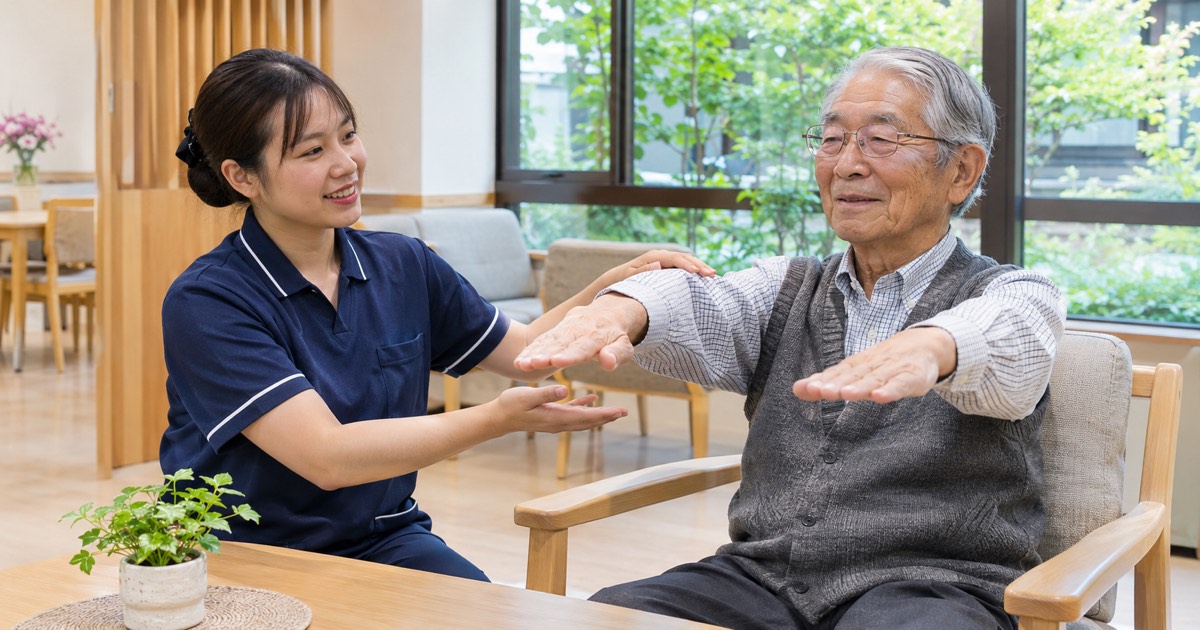
A Vietnamese caregiver can work in Japan through the Specified Skilled Worker (SSW) nursing-care route when they pass the required care and Japanese examinations and sign with a Japanese care employer. The most important practical safeguard is to use the official DOLAB-JICA service to check the recruitment company and vacancy before paying anything. A Japanese language certificate alone does not create an SSW care visa.
Which visa route and who employs the worker
Japan lists nursing care among the fields for SSW(i). The Immigration Services Agency’s system outline explains that SSW(i) is a residence status for people with a considerable level of skills in designated industries. Your employer in Japan must be a care provider able to offer the job and the required support. The receiving organisation ordinarily applies for the Certificate of Eligibility in Japan; after that, the worker applies for a Japanese visa before travel.
Care work under this route includes hands-on support such as bathing, eating and toileting, along with related support activities. It is not the same as a Japanese licensed-nurse position, and it does not allow a person to arrive first and search for any job. Get the employer’s legal name, care-home address, work location and job description before signing a contract.
Tests and occupational requirements
The Japanese Ministry of Health, Labour and Welfare says that most new SSW nursing-care candidates pass three assessments: the Long-term Care Specified Skilled Worker Skill Evaluation Test, the Long-term Care Specified Skilled Worker Japanese Language Evaluation Test, and JFT-Basic or JLPT N4 or higher. The Ministry’s nursing-care SSW page is the current authority for that combination.
These are not duplicate tests. The English test outline says the skill test has questions on the basics of care, body and mind, communication and physical care. The care-Japanese examination concentrates on terminology, communication and documents used in the care setting. JFT-Basic or JLPT N4 assesses general daily Japanese. Complete all required tests for the care field unless an official rule gives you an exemption because of relevant Technical Intern Training completion.
Steps from Vietnam
1. Learn care Japanese and prepare for the separate skills and language assessments. Do not book a course merely because it advertises a “guaranteed visa.” The tests and a genuine contract are separate steps.
2. Search for authorised recruitment information through DOLAB-JICA, the official overseas-employment service. Its Japan SSW page describes the programme and links workers with service companies and vacancy information.
3. Ask the service company to explain every payment, deduction and training period in writing. Keep copies of the recruitment notice, receipts, contract and test results. Compare the job address and employer name on all documents.
4. Once a Japanese care employer accepts you, follow its Certificate of Eligibility process and the visa instructions given by the Japanese embassy or consulate. Arrange your health check and pre-departure documents only through the channels instructed for your case.
5. On arrival, attend the support orientation from the receiving organisation, register your residence locally and open the bank account used for wages. Japan’s procedure guide also requires a Specified Skilled Worker to notify immigration of a change or end of the employer contract within 14 days.
Real costs and who pays
Use only amounts published for the particular test or official transaction. The Ministry says the care skills and care-Japanese tests are about JPY 2,000 each, but the booking page can set a country-specific fee. DOLAB-JICA says a Vietnamese worker using a service company must pay it directly to that company and receive a valid invoice or receipt showing the amount, payer and receiver. It specifically warns workers not to pay an individual recruiter without a proper receipt.
The DOLAB-JICA information page says the Japanese receiving side covers prescribed training support through the service company and refers to at least JPY 50,000 for Japanese-language training and JPY 50,000 for skills training. Check the current written recruitment notice, because arrangements can differ and deductions for accommodation are separate from a recruitment charge.
Scams and illegal fees
Do not hand cash to a Facebook recruiter who cannot show an authorised service company, a Japanese employer and a receipt. A blank employment contract, a request to pay a deposit to “reserve” an SSW slot, or a promise to substitute another job after arrival are danger signs. Check that the position is nursing care, rather than a different sector using a care label. The official DOLAB-JICA portal is a much safer starting point than a broker’s messaging account.
Pay and rights
SSW workers must receive remuneration equal to Japanese workers doing comparable work. DOLAB-JICA says SSW workers should receive pay equivalent to Japanese workers at the same level, while the actual amount depends on the contract and workplace. Japan uses prefectural minimum wages, not one national figure, so ask which prefecture applies. Before you travel, ask for gross pay, overtime rate, each deduction, accommodation cost, shift pattern and the language used for safety instructions.
The Vietnamese embassy in Japan lists labour contact information and consular labour services at its official labour page. Keep that contact as well as your employer’s support contact. An employer, a recruiter or this guide cannot guarantee a visa; Japan decides each case under its immigration rules.
Questions people ask
What exams do Vietnamese caregivers need for Japan’s SSW route?
Usually the nursing-care skills test, care-Japanese test, and JFT-Basic or JLPT N4 or above.
Where can I check a Vietnamese recruitment company for Japan?
Start with the official DOLAB-JICA overseas-employment portal and keep written vacancy and payment records.
Can I pay a recruiter in cash for an SSW job?
Do not pay an individual recruiter without a valid invoice or receipt. DOLAB-JICA specifically warns against that.
Who gets the Certificate of Eligibility?
The Japanese receiving organisation normally applies for it before the worker applies for the visa.
Are SSW nursing-care workers paid the same as Japanese workers?
The programme requires equivalent pay for comparable work. The exact wage and deductions must be in the contract.
Official sources: Japan Ministry of Health, Labour and Welfare: accepting specified skilled workers in nursing care, Japan Ministry of Health, Labour and Welfare: care-worker skill and Japanese evaluation test outline, Immigration Services Agency of Japan: Specified Skilled Worker system outline, Immigration Services Agency of Japan: procedures for entry and residence, DOLAB-JICA: Japan Specified Skilled Worker information, DOLAB-JICA: official overseas-employment vacancy service, Embassy of Vietnam in Japan: labour consular services