
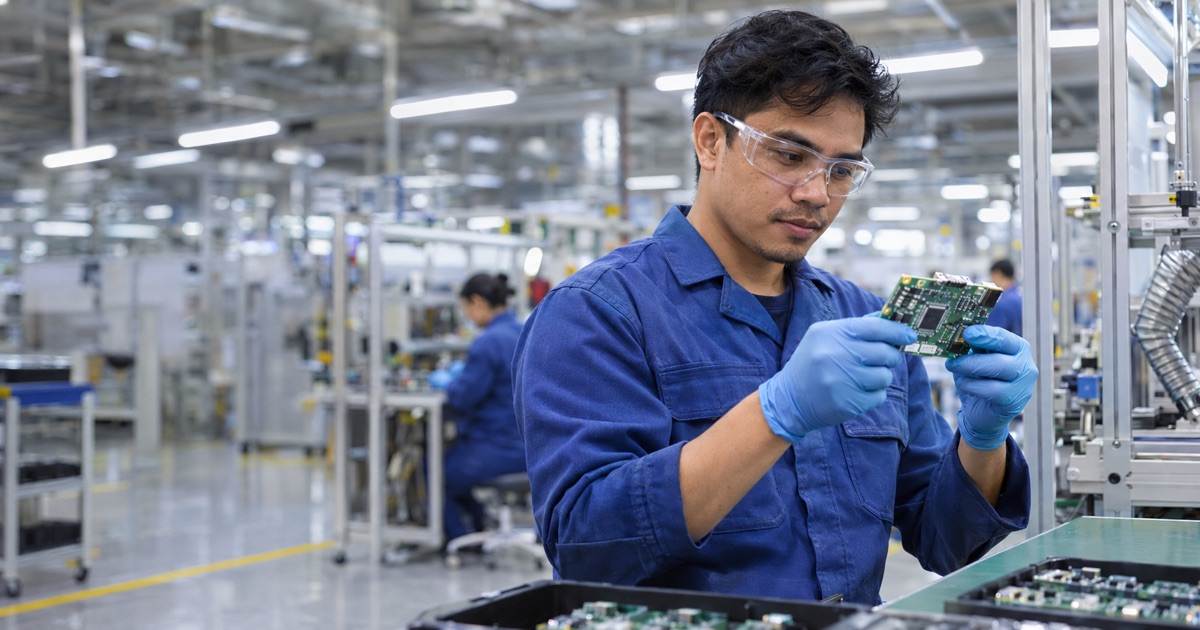
Filipinos who want a factory job in South Korea normally use the Employment Permit System, known as EPS. It is a government-to-government route administered in the Philippines by the Department of Migrant Workers, or DMW, and in Korea by the employment authorities. The key condition is passing the EPS selection process and being chosen by a Korean employer. Paying a private agent cannot put you ahead of the official roster.
Which work route applies and who hires you
Manufacturing jobs use the E-9 non-professional employment route under EPS. The Korean Ministry of Employment and Labor explains that EPS allows small and medium-sized businesses that cannot find Korean workers to employ foreign workers legally. The system is not an open job-search visa. The employer first receives an employment permit, then a contract is signed, and the visa and entry process follow.
For a Filipino applicant, the official starting point is the DMW EPS-TOPIK portal. Registration only opens when DMW announces a recruitment period. The portal currently shows that no registration is open, so do not give money to anyone offering a guaranteed current slot. Watch DMW announcements instead.
Requirements for factory work
EPS-TOPIK is the Korean language test used in the selection process. It is not the same as ordinary TOPIK taken for study. The DMW portal lists baseline eligibility for the published intake, including being 18 to 38 at registration, not being restricted from leaving the Philippines, no deportation record from Korea, and no disqualifying prison sentence. It also checks colour-vision and previous E-9 or E-10 work history rules. Read the rules for the actual intake because the notice, industry and documents can change.
A pass does not equal a job. DMW's official roster advisory says passing the Korean test qualifies the candidate for inclusion in the EPS job-seeker roster, while HRD Korea reviews and approves applications. A Korean company selects from that roster. Some recruitment cycles also include skills or competency assessment. Keep this difference clear: test result, roster inclusion, employer selection, contract and visa are separate stages.
Factory work can involve standing for long shifts, repetitive tasks, machinery, heat, noise or chemical controls. Read the actual job description, safety information, location and accommodation terms before agreeing to the contract. Do not hide a medical condition or submit altered documents; that can end the application or employment.
Step by step from the Philippines
First, create or update the account needed for the DMW EPS announcement and wait for the official online registration dates. Prepare the exact passport and photo files requested by that notice. The DMW portal gives file format and photo requirements. Use your own email address and mobile number so that an agent cannot control your account.
Second, register for EPS-TOPIK only through DMW when the portal opens. Pay the test charge only through the instructed official payment route after your application is approved. For example, DMW's 2026 Special EPS-TOPIK advisory listed a USD 24 test fee, but that announcement was for eligible former EPS workers. It is not a price list for every new applicant.
Third, study Korean and take the required tests. If you pass, follow DMW instructions for medical examination, documents and roster submission. The 2025 DMW advisory specifically says the medical examination should be done only after the official result announcement and at a Department of Health accredited clinic. Do not buy a medical certificate in advance from an unlisted broker.
Fourth, wait for employer selection and review the Korean employment contract carefully. EPS stages described by the Korean ministry are language testing, job-seeker roster, employer permit, employment contract, visa issuance and entry, followed by employment education. The DMW government-placement service, not a random Facebook page, is the Philippine body to follow for verified EPS updates.
Real costs and who pays
Only pay fees that appear in the relevant DMW announcement or are requested by the named official service. The test fee, medical examination, passport, document and departure costs can vary by intake. Keep electronic confirmations and paper receipts. Ask DMW directly if a payment request does not appear in its portal or advisory.
The Korean employer must provide a contract under EPS. Do not agree to an unexplained recruitment fee, a cash payment for a company choice, or a deduction before you have seen the authorised contract. If a promised amount includes accommodation or food deductions, ask for the written amount and conditions in advance.
Scams and illegal fees
The biggest warning sign is a person selling an EPS slot, test pass, roster position or Korean employer. Neither a passing mark nor a private course can guarantee selection. The DMW advisory is explicit that being on the roster does not guarantee employment. Use the official DMW EPS portal, keep your login private, and never submit fake medical or identity documents.
Check a message against the DMW website or official EPS contact details before sending money. Avoid links that copy DMW colours or use a personal bank account. Do not give your passport to an unverified intermediary. Report suspected fraud to the Philippine authorities and preserve screenshots, payment records and names.
Pay and rights
Korea's statutory 2026 minimum wage is KRW 10,320 per hour, or KRW 2,156,880 a month on the published 209-hour basis. Your wage can be higher, but take-home pay can also reflect lawful deductions stated in the contract. Ask for a pay slip and keep a record of hours and overtime.
The Korean ministry says EPS workers receive counselling, Korean-language education and everyday-law education through support centres. You are not free to change industry under the ordinary E-9 arrangement, and workplace changes have legal limits. Seek official advice before leaving a job or accepting work for another business.
EPS is a regulated path, not a promise of a Korean factory job or a visa.
Questions people ask
Can I apply directly for Korean factory work from the Philippines?
Use the DMW Employment Permit System route when registration opens. The Korean employer selects workers from the official roster.
Does passing EPS-TOPIK guarantee a job?
No. A pass can make you eligible for the job-seeker roster, but employer selection and later visa steps are still required.
What is the E-9 visa?
It is the Korean employment status generally used for non-professional foreign workers entering through EPS.
How much is Korea's minimum wage in 2026?
The official Korean minimum wage is KRW 10,320 an hour, with the published monthly figure based on 209 hours.
Should I pay an agent for an EPS slot?
No. EPS registration and announcements are handled by DMW and Korean authorities. A private agent cannot sell a guaranteed slot or employer selection.
Official sources: Department of Migrant Workers: EPS-TOPIK Philippines portal, Department of Migrant Workers: EPS-TOPIK Advisory No. 1, 2026, Department of Migrant Workers: EPS advisory on roster inclusion, Korean Ministry of Employment and Labor: Employment Permit System, Korea Minimum Wage Council: 2026 minimum wage, Department of Migrant Workers: Government Placement Bureau services